Climate Change
Climate change is defined as a shift in patterns of temperature and precipitation relative to a given reference period. Many people agree that the earth is currently experiencing anthropogenic (man-made) climate change or accelerated natural climate change. There is still much to learn regarding how climate change will affect forests, and the role forests can play in mitigating climate change. SFI participants are required to participate in climate change research for both adaptation and mitigation. The use of Best Management Practices (BMPs) ensures that our forests remain resilient to the impacts of a changing climate. The governments of Ontario and Manitoba have been working on strategies to understand, mitigate and adapt to climate change.
The following is information available on the Government of Ontario website:
Climate Change and Forestry
Scientific evidence suggests that climate change could impact the province’s natural resources, including forests, causing:
changes in forest growth due to climate warming and changes in precipitation
changes where tree species can grow
extreme weather events, wildfires and other natural disturbances
Managing Ontario’s forests sustainably can help address the effects of climate change.
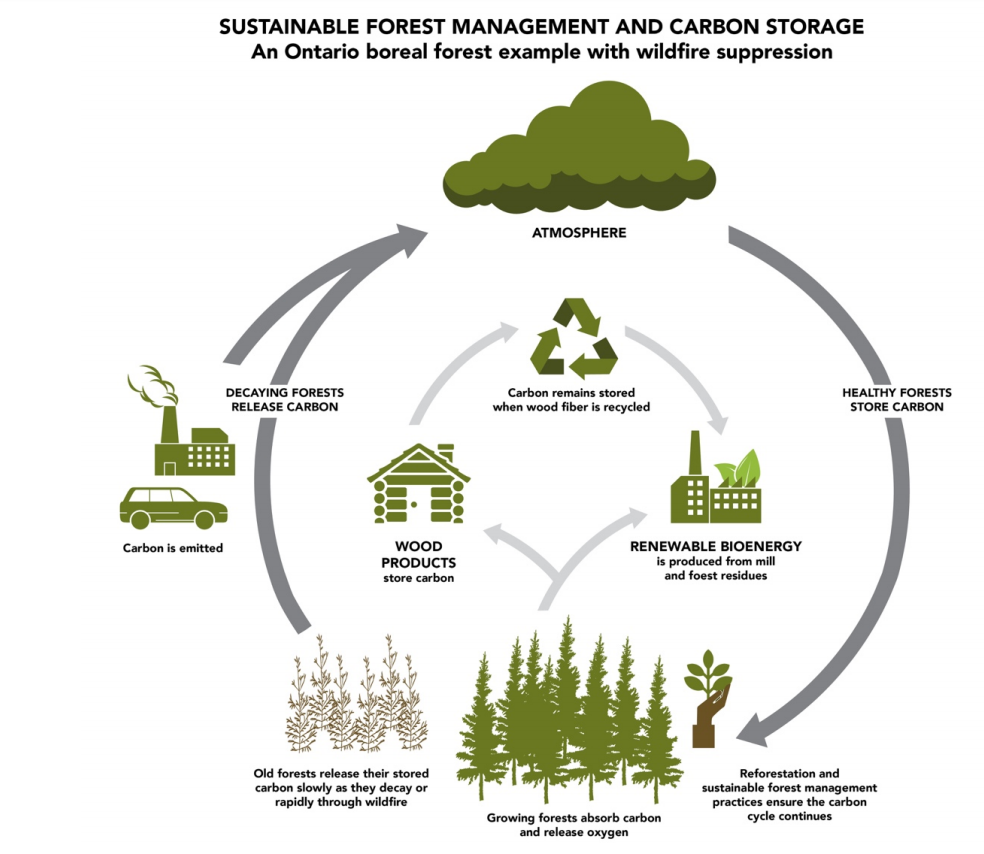
Forests and Carbon Storage
Forests sequester and store carbon (temporarily) in trees, soil and organic matter
Carbon is also stored in harvested wood products
Older forests contain more total carbon but the rate of sequestration is slow and outweighed by losses of carbon from trees dying and decomposing
Young forests contain less total carbon but they sequester carbon at a faster rate than older forests.
Carbon is also emitted from forests through natural disturbances such as fire, insects, disease, and wind.
Mitigation Activities
To reduce greenhouse gases and mitigate climate change we:
apply sustainable forest management practices
further increase carbon storage by sustainably harvesting forests and storing carbon in longer-lived wood products
adapt management practices to enable productive and resilient forests into the future
make information available on the mitigation potential of Ontario’s forest sector
estimate the costs of mitigation in Ontario’s forest sector